
mechatronic and cyber-physical systems, m.eng.
Faculty of Applied Natural Sciences & Industrial Engineering
Why choose this programme?
- Beyond core technologies, two interdisciplinary modules dive deep into the practical applications of Cyber-Physical Systems and the critical Functional Safety required for modern control software.
- Four real-world case studies are incorporated into your syllabus. Working in agile, international teams, you will tackle industry-style challenges, fuse diverse global perspectives, and build the exact collaborative skills gobal employers seek.
- Study directly alongside the co-located Campus for Intelligent Production, Campus for Intelligent Robotics, and Digital Innovation Centre.
- German language classes are integrated directly into your study plan to help launch your career in top-tier German technology and manufacturing firms.
- Graduate with a high-quality Master of Engineering (M.Eng.) degree, fully prepared for creative research and development, or doctoral research.
Alumni Profiles
2020 | Mechatronic and Cyber-Physical Systems (Campus Cham)
Career Development
I am currently working as a test engineer in the electronics and mechatronics manufacturing industry, having moved from the oil and gas industry where I worked as a civil engineer.
My aim is to become a specialist in embedded systems (software and hardware). I believe that by studying "Mechatronic and Cyber-Physical Systems" at DIT, I have laid the foundations for a career in this field.
Reminiscing allowed: remember your student days on Campus Cham
I will always remember my first Christmas party on campus. It was so friendly and welcoming, especially considering I had only just arrived in Germany. I was incredibly excited to interact with people from different cultures and make new friends.
I also think the learning atmosphere was quite unique, as I didn’t notice any tension in the student-lecturer relationships. I felt that every time I attended a lecture, I was learning from a friend. The lecturers’ open-mindedness made the art of learning even more appealing.
I had my first exciting hackathon experience in March 2019 (Moving Station Pilsen) with my colleagues, who introduced me to current trends in mechatronics-related technologies, and I would like to thank the university for this opportunity, as I was new to the field of mechatronics.
What advice would you give current students?
I have learnt that, as a student, you have to work very hard to become proficient in every field of study. Whilst the lecturers will always provide guidance and support, you have to realise that we are the main driving force behind finding solutions to the concepts that interest us.
Feel free to approach your fellow students and be prepared to share your knowledge with others who are seeking it.
I have benefited greatly from the tutorials organised by my fellow student, in various ways that have enabled a deeper understanding and allowed more time for questions and clarification. I therefore strongly recommend that tutorials are learning aids and should not be seen as a substitute for attending lectures.
Finally, I advise you to be open-minded and to keep everything as simple as possible. Embrace criticism, as this will open up space for development and strengthen your willingness to try things out regardless of the expected outcome.
2021 | Mechatronic and Cyber-Physical Systems (Campus Cham)
Why did you choose this programme?
After my bachelor's studies in Mechatronics, I wanted to pursue further studies to deepen my knowledge and specialize in the field of mechatronic systems that integrate AI solutions. This programme at DIT was the perfect choice since it provides many newly advanced technologies in mechatronic systems.
Reminiscing allowed: remember your student days on Campus Cham
This programme has many diverse paths and a wide variety of topics as well as the case studies that are part of some courses, which let me practically apply what I learned in theory.
What advice would you give current students?
At DIT, you will get to know many students with different backgrounds and cultures. You will also be given the opportunity to learn a new language provided each semester by the language center at DIT.
2021 | Mechatronic and Cyber-Physical Systems (Campus Cham)
Career Development
I come from India; I currently live and work in Germany. Basically, I am passionate about smart products. Collecting data from different sensors and playing with AI algorithms is my hobby. To develop such futuristic products, one should definitely master technologies from different domains. My degree programme “Mechatronic and Cyber-Physical Systems” was a perfect choice for me, as it is focused on teaching a stack of trending technologies.
Reminiscing allowed: remember your student days on Campus Cham
I enjoyed learning from industrial expert professors, gaining multidisciplinary skills and knowledge from this degree programme. It gave me a strong base to solve complex engineering problems. This foundation helped me, for instance, to develop an "Intelligent Smart Mover" during my Master’s programme.
What advice would you give current students?
Studying at DIT not only gives you an opportunity to meet amazing people, but there is a striking alumni network. The positive atmosphere on Campus Cham allow its students to engage in activities beyond academics. In short, DIT challenges its students not only to pursue their academic goals but also their personal interests.
2022 | Mechatronic and Cyber-Physical Systems (Campus Cham)
Career Development
I graduated as a Mechanical Engineer in India in 2013 and spent nearly five years in the corporate sector, eventually leading a team at Amazon. Despite the career growth, my passion for the core mechanical industry remained strong. That passion led me to pursue further studies in Mechatronics at DIT, and in 2018, I moved to Germany to make that dream a reality.
During my time at DIT, I completed multiple internships and worked on a Master's thesis in the field of medical 3D printing, which I successfully defended in 2021.
Since graduation, I have been working as a Service Manager at an industrial FDM 3D printer manufacturer for almost three years. Currently, I work as a Science Manager for TUM.Additive at the Technical University of Munich, where I support the strategic development of additive manufacturing research and enable collaborations across academia. With my experience in the industry, I am trying to build bridges between industry and academia.
Reminiscing allowed: remember your student days on campus cham
Oh, nostalgia! I thought I had prepared myself well for moving to a new country, but Cham had its own way of surprising me. From being featured in a local newspaper article as one of the first international students to getting locked between four walls during the lockdown, it has been a long, transformative journey. Cham quickly became a second home. Our landlord treated us like family, and the neighbors were incredibly warm. The DIT campus gave me friends for life and lessons for growth, both personally and professionally.
What advice would you give current students?
One word: Start!
Start applying for internships early. Start learning German. Start integrating into the local culture, even if it means stepping out of your comfort zone. Start travelling, even if it feels like too much.
To all international students reading this: I know the pressure of part-time jobs and financial worries. I’ve been there. But trust me, your language skills and your ability to connect with the community around you will open far more doors than you can imagine.
student case studies
- door lock with facial recognitions
- virtual bank simulation
- 3D print of a key fob
- hand gesture recognition
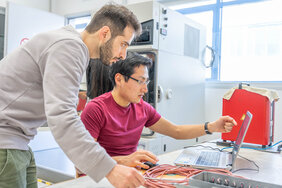
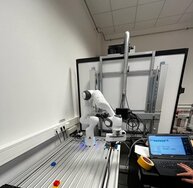
During student case study projects, the planning of project processes and their implementation as well as social skills through working in a team are practised.
Motivation
Commercially available intelligent ("smart") door locks are usually controllable via fingerprint recognition, numerical code and/or radio/app and are available in the form of a locking cylinder or as an attachment.
As part of the project for a personalised, retrofittable door lock, a simple mortise lock has been converted to replace the existing lock. In addition, facial recognition is to be used for control, along with other methods.
Project Goals
- Modification of the mechanics of a simple mortise lock so that the locking bolt is moved by an electric motor
- Development and implementation of a face recognition system with life detection to open the lock
- Development of a retrofit kit for any door with the simplest possible assembly and programming for laypeople
Approach
- Development and implementation of mechanics and electrics for the movement of the locking bolt
- Further development and implementation of face recognition and other control types based on an initial model
- Installation and test using a simple interior door
Contact person for project information
Especially in rural areas, bank branches are increasingly equipped with ATMs instead of staff, but is that really enough?
Using appropriate mathematical models, students analysed the core factors of queues: from the arrival process to waiting time and service at the counter to the number of customers.
Project Goals
The project group simulated various what-if scenarios in order to optimise the respective waiting time of the bank customers to the maximum. At what point do more ATMs have to be available? Conversely, at what point is more service staff required to relieve queues?
Images


Image 1 & 2: Master students modeled a virtual bank simulation with dynamic object animations in the form of service personnel and ATMs.
Contact
Motivation
An example of a production flow is the individual production phases of a hand-signed key fob, from the drawing in the CAD programme to the finished 3D colour print.
Project Goals
The laboratory aims at constantly optimising the print quality, print speed and simultaneous 3D printing of several objects.
Images

Image 1: the CAD design.
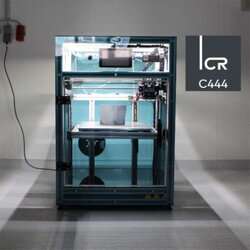
Image 2: 3D printer using the CAD design.

Image 3: the finished key fob.
Contact
Our student labs are home to collaborative work through the use of supporting technologies at the workplace.
Project Goals
In the master's project "Hand Gesture Recognition", a gripping robot is controlled directly by hand gestures and thus reduces the workload through automated loading and unloading processes.
Images
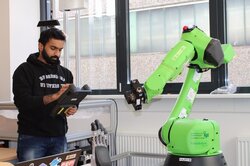

Image 1 & 2: student controls the robot using hand gesture recognition.
Contact
Module Overview
Overview of lectures and courses, SWS (Semesterwochenstunden = weekly hours/semester) and ECTS (European Credit Transfer and Accumulation System) in the master's programme "Mechatronic and Cyber-Physical Systems".
Career Prospects
Autonomous production lines, medical robotics, and smart mobility demonstrate the boundless scope of modern automation. As emerging technologies continue to conquer new sectors, specialized expertise is more sought-after than ever.
Graduates are equipped for key roles across:
- research & development
- robotics engineering
- autonomous systems design
- hardware & software development
- energy systems
- manufacturing engineering
- automotive engineering